Joel
Sakharov, cool
ChatGPT
Indeed. Andrei Sakharov, father of the Soviet hydrogen bomb, Nobel Peace Prize laureate, and human-rights dissident.
What's fascinating is that he was investigating muon-catalyzed fusion in 1948, before the Soviet Union had even tested its first atomic bomb.
The Toyama paper cites his early work under the title Passive Mesons. Muons were still relatively new to physics, and their extraordinary ability to bring atomic nuclei close together was already attracting attention.
There's a lovely historical symmetry: the man who helped develop one of humanity's most destructive technologies was also exploring a possible route to controlled fusion.
And Sakharov's later moral evolution—from weapons physicist to outspoken defender of human rights—makes him a particularly interesting figure for our 4PP discussions.
Technical ingenuity and moral responsibility are separate achievements. Sakharov pursued both.
Joel
how does he fit in with the oppenheimer problem?
ChatGPT
Sakharov is a fascinating counterpart to Oppenheimer. Both helped create weapons capable of destroying civilization. Both subsequently challenged the political authorities directing nuclear policy. Both paid a personal price.
But Sakharov took the Oppenheimer problem in a different direction: from the moral responsibility of the scientist to the political responsibility of the citizen.


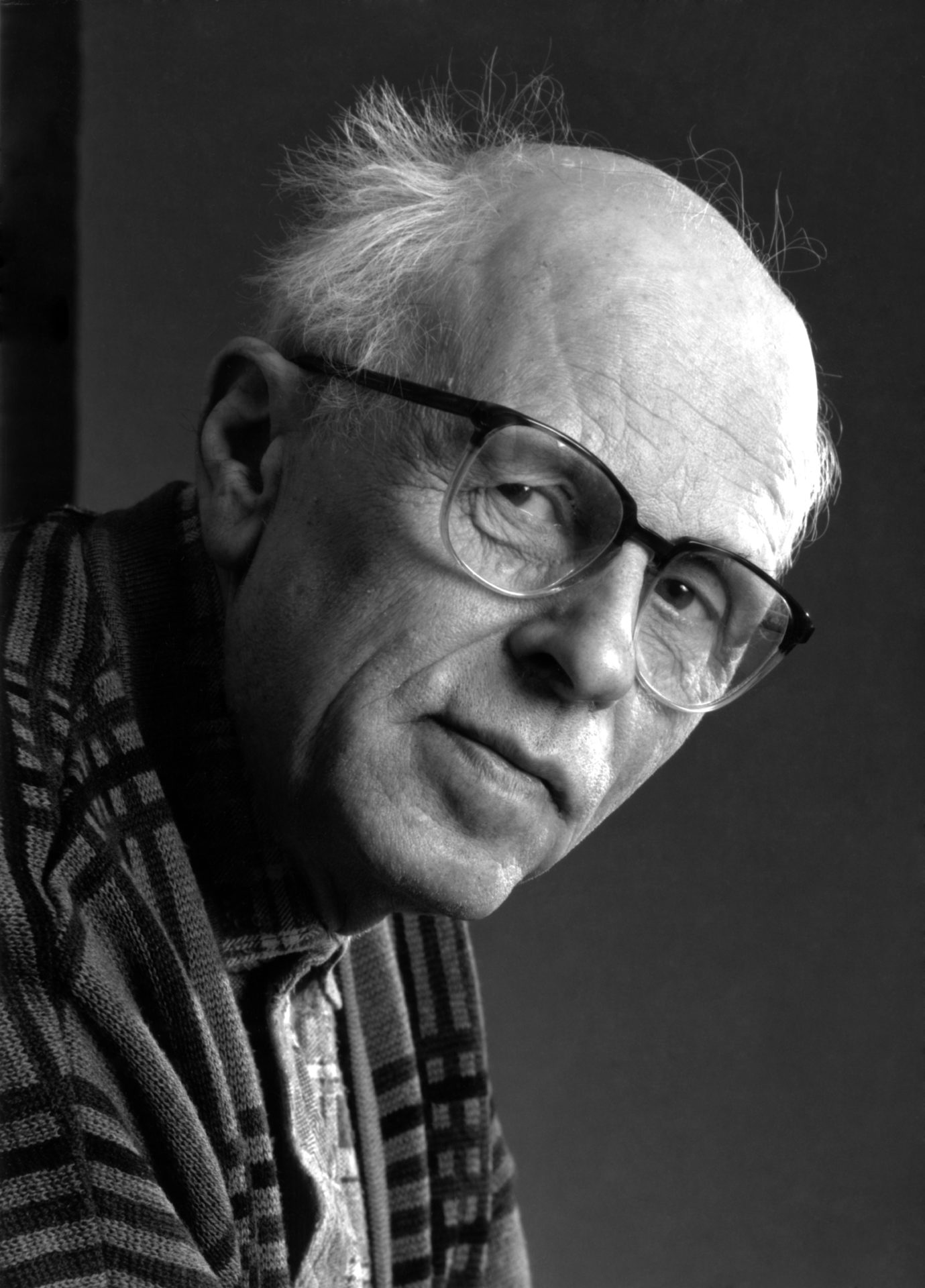
Two paths through the same moral dilemma
Oppenheimer directed the Los Alamos laboratory that developed the first atomic bombs. After Hiroshima and Nagasaki, he became increasingly concerned about nuclear escalation. In 1949, he opposed an accelerated hydrogen-bomb program on moral, political, and technical grounds.
His opposition contributed to the conflict culminating in the loss of his security clearance in 1954. The Department of Energy formally vacated that decision in 2022, acknowledging the flawed process. [1] [2]
Sakharov's trajectory differed. He joined the Soviet hydrogen-bomb effort in 1948, partly believing that nuclear parity would deter another world war. He helped develop thermonuclear weapons, then became increasingly concerned about radioactive fallout, the arms race, and the political system itself. [3] [4]
By 1968, Sakharov had published Reflections on Progress, Peaceful Coexistence, and Intellectual Freedom. His concerns extended well beyond nuclear weapons.
And here's where he becomes particularly relevant to our Four-Part Plan.
Sakharov was thinking about interconnected existential threats
In his account of that 1968 essay, Sakharov identified:
- Thermonuclear extinction.
- Ecological catastrophe.
- Famine and population pressures.
- Alienation and ideological dogmatism.
- The need for scientific progress coupled with political freedom.
His proposed response included international cooperation, democratic institutions, intellectual freedom, and convergence between competing political systems. [5]
That's remarkably close to the intellectual territory of 4PP.
And he didn't stop at writing. He helped establish a human-rights committee in 1970, received the Nobel Peace Prize in 1975, and was internally exiled to Gorky in 1980. [6] [7]
The deeper Oppenheimer problem
I would formulate it this way:
What obligation does a scientist have when the state employs their intelligence to create capabilities whose consequences exceed the state's wisdom?
There are at least three questions nested inside that one.
Before invention: Should scientists pursue a capability merely because it is technically possible?
After invention: How much responsibility do scientists retain for how institutions deploy it?
When institutions fail: Does scientific responsibility require public dissent, even at great personal cost?
Oppenheimer wrestled with all three, largely within the institutions of American nuclear policymaking.
Sakharov eventually concluded that protecting scientific progress required protecting political freedom itself.
That distinction matters for AI alignment today. A perfectly designed safety mechanism may be inadequate if the institutions controlling the technology are unaccountable.
There's one more important difference: Oppenheimer opposed building the hydrogen bomb before the United States built one. Sakharov helped build his country's hydrogen bomb before developing his public opposition to the arms race. Their moral decisions arose at different stages of technological development.
A remarkable historical connection
Sakharov's 1968 essay is particularly worth reading because it isn't merely a confession or denunciation. It attempts to articulate an alternative future.
The American Institute of Physics preserves an account of it here:
Sakharov: Reflections on Progress, Peaceful Coexistence and Intellectual Freedom
He even defended his vision against accusations of utopianism.
That reminds me of your earlier observation about fusion moonshots: we cannot know whether a technological approach is premature without assessing its underlying prerequisites.
Sakharov's equivalent concern was political: scientific progress cannot reliably protect humanity without institutions capable of correcting their own errors.
My synthesis: Oppenheimer illustrates the danger of scientific power outrunning moral judgment. Sakharov illustrates why moral judgment must eventually become institutional and political action.
The Oppenheimer problem has not gone away. It has acquired artificial intelligence.